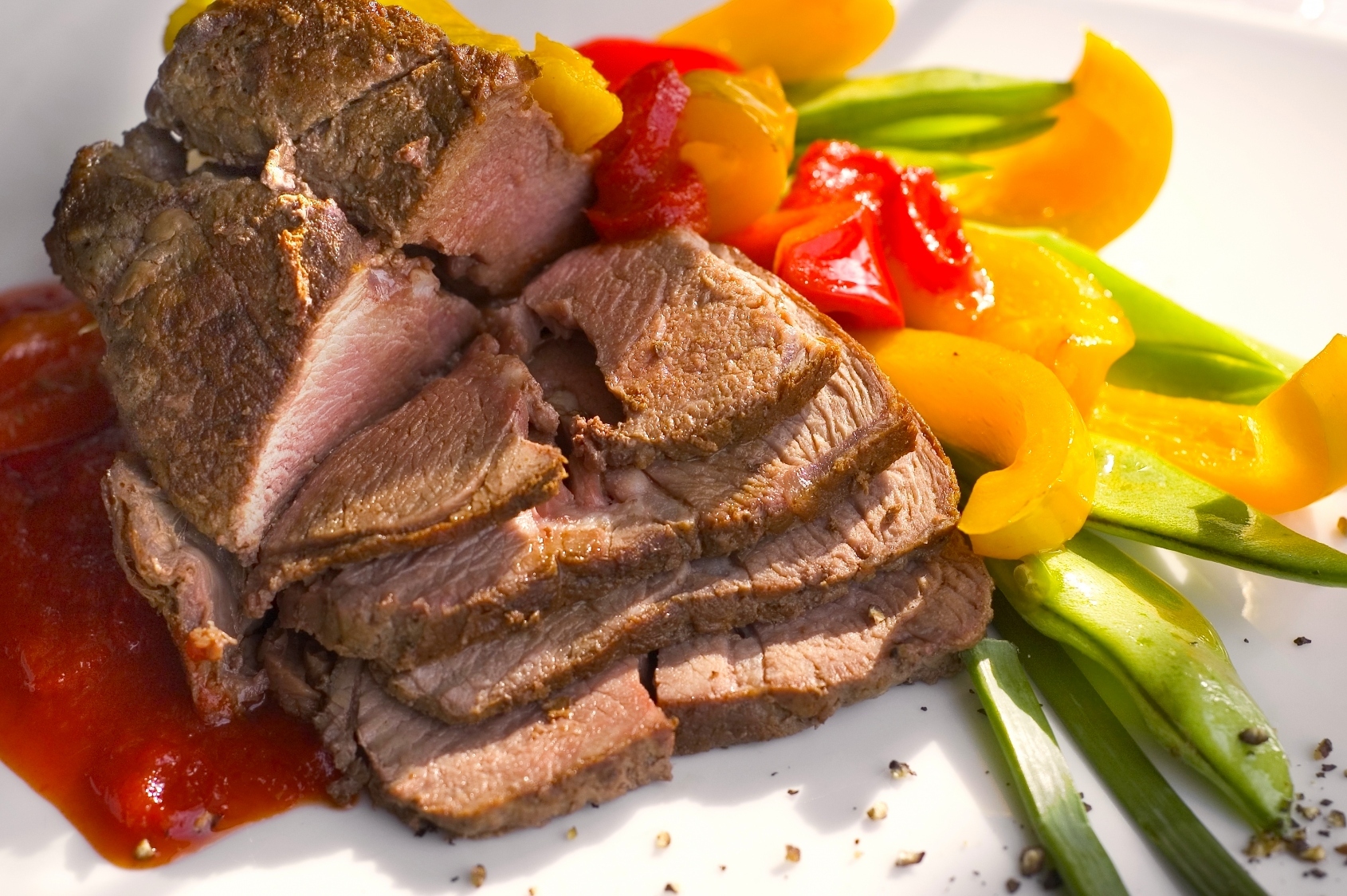
Cooking in broth is suitable for all “tough” cuts, usually on the front of beef or veal, often richer in collagen. This method of preparation makes it possible to tenderize the mutton, to accentuate the flavor by association with the vegetables and the aromatics and finally to make them more digestible.
Meats Cooked In Broth: What To Cook?
There are many pieces of beef used in broth dishes such as pot-au-feu, coarse salt beef, stew or mironton beef:
- Lean pieces like scoter, cheek or tip, even “stew” flank steak (under the steak flank).
- Gelatinous pieces like shank, twin, roost, or tail
- Fatty or semi-fatty pieces such as tendron, flank, flat ribs, or even the breast.
Veal broth dishes such as blanquette are prepared with a minimum of two meats:
- Low-fat pieces like the shoulder or the collar
- Others fatter, sometimes streaky, such as tendron or flank
Many tripe products are suitable for cooking in broth:
the calf’s head, tongue, and cheek (beef or veal).
Some slightly fatty pieces of pork are readily cooked in broth: the shank, the blade, the breast, or even the rack of ribs.
Lamb is less suitable for cooking in broth, except for the leg, which can be prepared in a pot. It’s an English-style boiled leg.
Boiled Meats: Cooking Time
Boiled meats like long cooking over low heat.
Count for a stew of 1 to 2 kilos of meat: 3 to 4 hours.
In the pressure cooker: 30 minutes, then 15 minutes with the vegetables.
For a hotpot: 2 hours to 2:30
For a veal blanquette: 1 hour 30 to 2 hours
Meats For Boiling: Instructions For Use
The boiled meat is cooked “in excess of water” in a liquid more or less flavored with bouquet garni, spices or fine herbs, etc. It is, therefore, essential to provide a sufficient quantity of water (2 to At least 3 liters for 1.5 to 2 kilos of meat).
Unlike meats cooked by concentration (such as roast) or by mixed-method such as braising, boiled cooking is done by expansion in the cooking liquid, which allows meats, vegetables, and herbs to soak up subtly the perfume of each other. If you want to favor the flavor and clarity of the broth, you put the meats in cold water before starting to cook and skim. On the contrary, to keep the meat more flavorful, it should be put in boiling water after or at the same time as the vegetables.
For the pot-au-feu, the classic ingredients, in addition to the meats, are turnips, parsnips, onions, most often cloves, leeks, and celery, without forgetting herbs and bouquet garni. In some regions, it is prepared with three meats: beef, veal, and pork. Finally, the hotpot generally combines a mixture of meats of different species, cabbage, and potatoes.
Boiled Meats: Which Container To Choose?
The king of boiled meats was once the pot, a large cylindrical container, or even the “pot,” the meaning of which is still found in the expressions “pot-au-feu” or “chicken in the pot.” The large pots no longer being used today, we now use casseroles, round or oval, cast iron, or ceramic. For lack of anything better, a “casserole dish” or a large-capacity saucepan may be suitable. The main thing is to provide a container of sufficient capacity to accommodate all the ingredients and a large amount of broth.
Boiled: The Ideal Accessory
The skimmer, this utensil in the shape of a large flat or hollow spoon riddled with small holes, is the essential accessory for broth preparations. Round and flat, it is used to remove the scum on the surface. More ladle-shaped, it allows you to pick up meats and vegetables from the bottom of the pot to reserve or serve.
Chef’s Tips For Properly Boiling Meat
Do not hesitate to be generous in quantities when preparing meats cooked in broth firstly, because a good stew is often even better the day after its preparation. It is then sufficient, before heating it, to degrease it on the surface. But above all, the leftovers of the pot-au-feu can lend itself to many easy and quick recipes to prepare in the days following its preparation. By extension, we used to call “boiled” pieces of beef used in the preparation of a stew and then reused. Meats cooked in a pot-au-feu or a blanquette can, be eaten cold, in salads, but also hot, in hash browns, in meatballs, in stuffings, or even in pie mince … Boiled meats have the advantage. Not to fear new cooking and to keep the aromas of the previous cooking.
To know more about the meat, we recommend another very delicious mutton curry Andhra style recipe. You should try this as well
 Digital Bash